
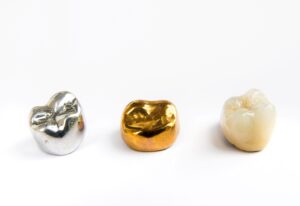
Metal has been the material of choice for many years when it comes to dental crowns. Its durability and effectiveness made it a no-brainer for dentists. But lately, with the accessibility and cosmetic advantages of materials like porcelain and composite resin, metal crowns are becoming a thing of the past. If you’ve had a metal crown for years that’s about reached its expiration date, continue reading to learn why you may want to consider replacing it with something else.
You Want a More Natural-Looking Smile
Speaking of cosmetic advantages, one of the most common reasons people replace metal crowns is their appearance. Old-school crowns are generally silver or gold in color and therefore very noticeable, whether you’re delivering a big presentation at work or cracking up over dinner with friends.
If your crown is on a visible tooth, its metallic appearance may make you feel self-conscious. Tooth-colored crowns made from materials such as porcelain or zirconia can blend more naturally with your surrounding teeth.
Your dentist can help you choose a shade and material that complements your smile. Depending on the tooth’s location and your bite, a ceramic restoration may provide an attractive balance of aesthetics and function.
Your Existing Crown is Damaged or Worn
Although metal crowns are known for their durability, they are not indestructible. Years of chewing, grinding, and normal wear can eventually affect a crown’s condition.
You may need a replacement if your crown becomes loose, develops damage, or no longer fits properly. A poorly fitting crown can allow bacteria to collect around its edges, potentially increasing the risk of decay in the underlying tooth.
Never assume that a crown needs replacing simply because it is old. Your dentist can evaluate its condition and determine whether replacement is necessary. If the crown is still functioning well and the tooth underneath is healthy, keeping it may be the best option.
You Have Concerns About the Tooth Beneath the Crown
A dental crown covers the visible portion of a tooth, but the underlying tooth can still develop problems. Decay may form near the crown’s margins, and the tooth’s nerve can sometimes become inflamed or infected.
Warning signs may include persistent sensitivity, pain when biting, gum swelling, or an unpleasant taste near the restoration. However, some problems develop without obvious symptoms.
Replacing the crown may be part of the solution, but your dentist must first identify and treat the underlying issue. Depending on the findings, treatment could involve removing decay, performing root canal therapy, or addressing gum disease before placing a new restoration.
You Want to Update Your Dental Restorations
If you’re considering cosmetic dentistry, replacing an older metal crown may help create a more uniform smile. Modern restorative materials can offer natural-looking color and shape while restoring a tooth’s function.
Keep in mind, though, that replacement is not automatically necessary just because newer materials are available. Your dentist will consider the tooth’s position, the forces placed on it during chewing, and whether a tooth-colored crown is appropriate for your situation.
Metal crowns can serve patients well for many years, but appearance, damage, underlying tooth problems, and cosmetic goals may make replacement worth considering. Schedule an examination to discuss your options and determine whether a modern tooth-colored crown can meet your needs while protecting your oral health.
About the Author
Dr. Hannah Burton earned her Doctor of Dental Surgery degree from The Ohio State University College of Dentistry and has studied extensively through Spear Education, one of the leading postgraduate learning institutions for practicing dentists. She’s also an active member of the American Dental Association and the Ohio Dental Association. Contact Burton Family Dental Jerome online or call (614) 215-9180.